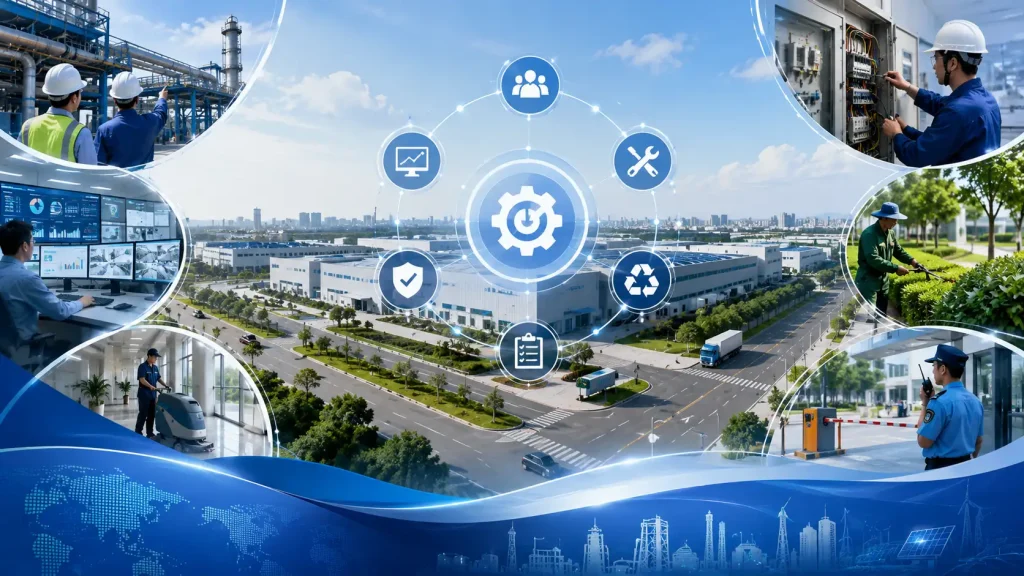
Eco-Industrial Park Definition: How Sustainable Industrial Zones Work
In an era defined by rapid climate change, environmental degradation, and resource scarcity, traditional industrial practices are undergoing a massive global transformation. Modern manufacturing is transitioning from a linear “take-make-waste” model to a circular, regenerative system. At the heart of this sustainable evolution is the eco-industrial park (EIP). But what is an eco-industrial park, and why is it becoming the blueprint for future industrial development?
An eco-industrial park is defined as a community of manufacturing and service businesses located together on a common property, where member businesses seek enhanced environmental, economic, and social performance through collaboration in managing environmental and resource issues. By sharing resources, exchanging by-products, and optimizing waste management, these parks aim to achieve sustainable development while driving commercial viability. This collaborative approach is often referred to as “industrial symbiosis,” a process where the waste of one company becomes the raw material of another.
This comprehensive guide explores the core eco-industrial park definition, the global standards that govern them, the economic and environmental benefits they offer, and how progressive regulatory frameworks like Vietnam’s Decree 35/2022/ND-CP on eco-industrial parks are accelerating this global green transition.
Eco-Industrial Park Definition: Understanding the Core Concept
To truly grasp the eco-industrial park definition, one must look beyond simple green spaces or solar-powered factories. An EIP is a highly sophisticated, integrated system based on the principles of industrial symbiosis. Just as biological organisms interact in mutually beneficial relationships in nature, businesses within an eco-industrial park share resources—such as energy, water, materials, and infrastructure—to reduce overall costs and environmental impacts.
According to the United Nations Industrial Development Organization (UNIDO), a true eco-industrial park does not simply focus on reducing pollution at the end of the pipe. Instead, it integrates green design, clean energy, resource efficiency, and social responsibility into its daily operations. The primary objective is to create a closed-loop system where the waste or by-product of one enterprise becomes the raw input of another.
Historically, industrial zones were characterized by high emissions, massive waste dumps, and heavy exploitation of local water resources. Eco-industrial parks turn this paradigm on its head by demonstrating that industrial growth and environmental stewardship are not mutually exclusive, but rather complementary drivers of long-term profitability.
Global Eco-Industrial Park Standards and Criteria
Establishing a certified green industrial zone requires adhering to strict benchmarks. The international framework developed jointly by UNIDO, the World Bank Group, and the Deutsche Gesellschaft für Internationale Zusammenarbeit (GIZ) outlines specific eco-industrial park standards. These guidelines are designed to help developers and governments monitor, validate, and scale the sustainability of industrial zones worldwide.
These global eco-industrial park standards are structured around four key performance pillars:
- Park Management Performance: This requires a dedicated management entity that actively promotes sustainability, facilitates industrial symbiosis, and maintains high standards of risk management and regulatory compliance.
- Environmental Performance: Parks must exhibit high efficiency in energy use, water consumption, and waste management. This includes utilizing renewable energy, treating and reusing wastewater, and minimizing greenhouse gas (GHG) emissions.
- Social Performance: An EIP must ensure safe and healthy working conditions, foster gender equality, and actively engage with local communities to mitigate any negative externalities of industrial production.
- Economic Performance: Beyond environmental goals, the park must remain economically viable, offering tangible business value, attracting high-quality foreign direct investment (FDI), and generating stable local employment.
Case Study: Vietnam’s Legislative Framework (Decree 35/2022/ND-CP)
Governments worldwide are implementing robust regulations to incentivize the transition to sustainable manufacturing. A prime example of this regulatory push is Vietnam’s Decree 35/2022/ND-CP on eco-industrial parks, which provides a comprehensive legal framework for planning, establishing, and operating sustainable industrial zones.
Under Decree 35/2022/ND-CP, the Vietnamese government outlines clear pathways for existing industrial parks to upgrade to EIP status. To qualify, industrial zones must meet several strict requirements, including:
- Wastewater Reuse: Reusing at least 20% of the park’s treated wastewater for landscaping, cooling, or internal production processes.
- Industrial Symbiosis: Ensuring that a minimum of 20% of enterprises within the park participate in industrial symbiosis or cleaner production processes.
- Monitoring and Compliance: Developing comprehensive digital monitoring systems for energy use, waste generation, and environmental compliance.
- Green Infrastructure: Allocating at least 25% of the total land area for green space, traffic, and shared public infrastructure.
This forward-thinking decree not only helps countries like Vietnam meet their Net-Zero carbon emissions targets but also offers attractive tax incentives and simplified administrative procedures for developers who embrace eco-industrial principles.
The Key Benefits of Eco-Industrial Parks
Adopting an EIP model yields profound advantages that extend far beyond corporate social responsibility. The benefits of eco-industrial parks can be categorized into three main areas:
1. Economic Benefits and Cost Savings
For businesses, resource efficiency translates directly to profitability. By engaging in industrial symbiosis, companies can significantly reduce their operational costs:
- Resource Efficiency: Sharing water treatment facilities and energy grids reduces the cost of utilities.
- Waste Commercialization: Selling industrial by-products (such as scrap metal, fly ash, or excess steam) to neighboring businesses turns waste management liabilities into profitable revenue streams.
- Logistics Optimization: The close proximity of suppliers and buyers within the same park minimizes transport costs and reduces supply chain risks.
2. Environmental Protection and Carbon Reduction
EIPs play a critical role in combating climate change and conserving natural ecosystems:
- Decarbonization: The widespread use of solar, wind, and biomass energy dramatically reduces the overall carbon footprint of manufacturing.
- Zero Liquid Discharge (ZLD): Advanced wastewater treatment systems allow parks to recycle water indefinitely, preventing toxic runoffs from contaminating local water bodies.
- Circular Materials: By closing the loop on plastic, metal, and chemical waste, eco-industrial parks alleviate pressure on landfills and reduce the demand for virgin raw materials.
3. Social and Community Advancement
Industrialization often faces public resistance due to pollution and health concerns. EIPs actively bridge the gap between heavy industry and local populations:
- Job Quality: EIPs prioritize occupational health and safety, offering cleaner, safer working conditions for employees.
- Community Integration: By investing in public green spaces, clean air initiatives, and educational programs, sustainable parks build strong local relationships and secure their social license to operate.
Industrial Symbiosis in Action: Real-World Examples
To understand how these concepts operate in the real world, consider the classic example of Kalundborg, Denmark, widely regarded as the world’s first functioning eco-industrial park. In Kalundborg, a coal-fired power plant, an oil refinery, a pharmaceutical giant, a plasterboard manufacturer, and the local municipality share a highly complex network of material and energy flows.
For instance, the refinery sends waste cooling water to the power plant. In turn, the power plant delivers excess steam to the pharmaceutical plant and the municipality for district heating. Furthermore, gypsum, a by-product of the power plant’s sulfur dioxide scrubbing process, is sold directly to the plasterboard factory, eliminating the need to import natural gypsum. This dynamic network saves millions of dollars annually while saving massive amounts of groundwater and reducing carbon emissions.
Frequently Asked Questions
What is the main difference between a traditional industrial park and an eco-industrial park?
A traditional industrial park operates on a linear system where individual factories buy raw materials, manufacture products, and dispose of waste independently. In contrast, an eco-industrial park utilizes industrial symbiosis. This means businesses actively cooperate to share resources, reuse wastewater, and exchange by-products, turning one factory’s waste into another’s raw material to minimize environmental impact.
How does Decree 35/2022/ND-CP support the transition to green industrial zones?
Decree 35/2022/ND-CP provides a clear, legal framework in countries like Vietnam to guide the planning, building, and conversion of industrial zones into eco-friendly hubs. It mandates specific environmental and social criteria, such as recycling 20% of wastewater and dedicating 25% of land to green areas, while providing financial incentives, preferential loans, and streamlined approval processes for developers.
Can existing industrial parks convert to eco-industrial parks?
Yes, existing industrial parks can be retrofitted and upgraded to meet eco-industrial park standards. This conversion process involves auditing current resource flows, identifying potential industrial symbiosis relationships among tenants, upgrading shared waste and water treatment facilities, and adopting renewable energy sources to meet national and international green benchmarks.