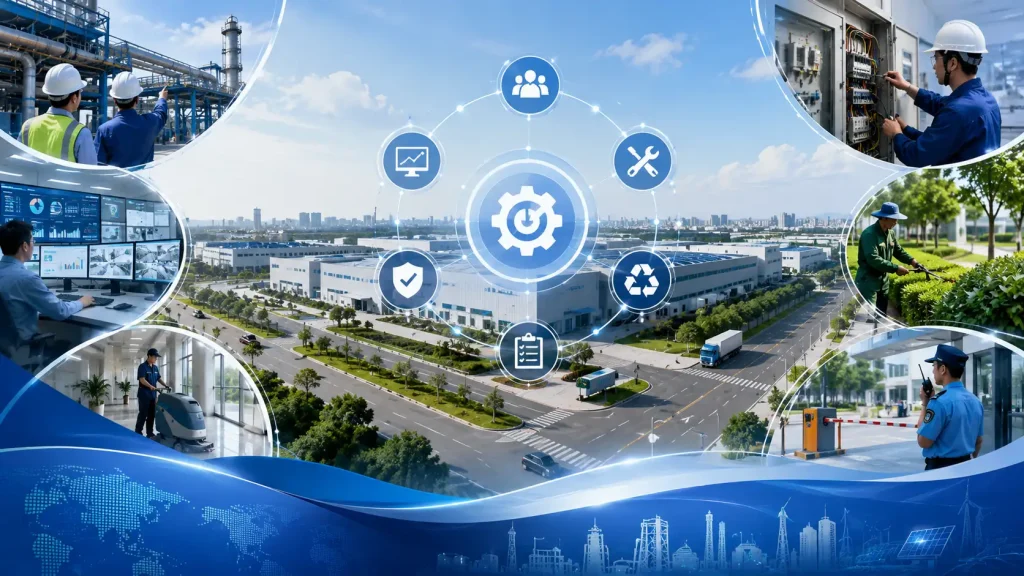
Green Industrial Park: How Sustainable Zones Drive FDI in Vietnam
As global manufacturing undergoes a paradigm shift toward sustainability, Vietnam is rapidly emerging as a primary destination for foreign direct investment (FDI). To maintain this competitive edge, the country is transitioning from traditional manufacturing hubs to modern, ecological zones. A green industrial park represents the future of sustainable production, combining resource efficiency, renewable energy, and strict environmental compliance to attract high-value multinational corporations.
What is an Eco-Industrial Park?
To understand this transformation, we must first address the foundational question: what is an eco-industrial park?
At its core, an eco-industrial park (EIP) is an industrial zone designed and managed to achieve high environmental, social, and economic performance through the integration of green technologies and industrial symbiosis. Unlike conventional industrial zones, an eco-industrial park fosters a circular economy where the waste, heat, or by-products of one manufacturing plant become the raw inputs for another.
According to Dr. Elizabeth Sandifer, a Senior Industrial Development Officer, “The transition to eco-industrial parks is no longer a luxury; it is an economic imperative. By utilizing closed-loop resource systems, industrial zones can reduce operational costs by up to 18% while cutting localized carbon footprints by more than a third.” This systemic integration of resource-saving practices forms the bedrock of modern green manufacturing hubs.
The Core Pillars: ESG Standards in Industrial Parks
The viability of any modern manufacturing hub is heavily measured by its alignment with international frameworks. Implementing ESG standards in industrial parks (Environmental, Social, and Governance) has become the golden standard for developers and regulators alike.
1. Environmental Stewardship (E)
- Renewable Energy Integration: Powering factories using rooftop solar arrays, wind energy, and biomass plants.
- Water Circularity: Implementing Zero Liquid Discharge (ZLD) systems that treat and recycle 100% of industrial wastewater for reuse in cooling towers and irrigation.
- Waste Minimization: Establishing robust sorting, recycling, and composting infrastructure to minimize landfill disposal.
2. Social Responsibility (S)
- Occupational Health & Safety: Guaranteeing world-class working conditions, ergonomic facilities, and clean air environments for factory workers.
- Community Integration: Developing green buffers, parks, and residential housing complexes for laborers to improve the local quality of life.
3. Governance and Transparency (G)
- Digital Monitoring: Deploying IoT-based smart grids and real-time emission tracking sensors to ensure all tenants comply with local and international regulatory frameworks.
- Transparent Reporting: Providing detailed carbon and resource utilization reports to help multinational tenants easily compile their global sustainability metrics.
Strategic Benefits of Green Industrial Parks for FDI Investors
For foreign firms planning to relocate or expand their production bases, entering a sustainable zone offers immense strategic value. The benefits of green industrial parks for FDI investors extend far beyond simple regulatory compliance:
- Immediate Access to Green Financing: Many international banks and investment funds offer preferential interest rates and lower capital costs to companies operating within verified green zones.
- Enhanced Global Brand Reputation: Consumers and stakeholders increasingly demand eco-conscious supply chains. Operating in a sustainable zone allows brands to proudly display certified low-carbon manufacturing labels.
- Shielding Against Carbon Tariffs: With the European Union’s Carbon Border Adjustment Mechanism (CBAM) and similar regulatory taxes coming into play, manufacturing in a low-emission park helps businesses avoid heavy penalties when exporting to western markets.
- Reduced Long-term Operational Costs: Though initial setup costs might be higher, the long-term savings derived from shared water treatment facilities, onsite solar power generation, and waste-to-energy recycling systems dramatically lower utility bills.
| Operational Aspect | Traditional Industrial Park | Green Industrial Park | | :— | :— | :— | | Energy Sources | Primarily coal-dominated national grid | Smart mix of rooftop solar, wind, and green grid power | | Water Treatment | Basic filtration before discharging to rivers | Advanced multi-stage recycling (ZLD) and reuse | | Primary Waste Strategy| Landfill disposal and basic incinerators | Industrial symbiosis (waste-to-input recovery) | | Regulatory Compliance | Minimum localized environmental standards | Global ESG standards and verified carbon-tracking systems |
Driving Towards Net Zero Emissions in Industrial Zones
Vietnam’s commitment to achieving net-zero emissions by 2050, made at the COP26 summit, has accelerated national policies targeting industrial decarbonization. Transitioning to Net Zero emissions in industrial zones is crucial for realizing this national target.
To achieve this, industrial developers are investing heavily in smart grid infrastructure and energy storage systems (ESS). These technologies allow factories to capture excess renewable energy generated during the day and discharge it during peak operating hours. Furthermore, industrial symbiosis networks are being designed to capture waste heat from heavy manufacturing sectors, such as steel or glass production, and convert it into thermal energy for nearby textile or food processing facilities. This drastically reduces the consumption of fossil fuels across the entire industrial ecosystem.
Prominent Green Industrial Park Models in Vietnam
Several pioneering developers are setting new benchmarks by executing highly successful green industrial park models in Vietnam. These sites serve as templates for future developments across Southeast Asia:
- The Deep C Industrial Zones (Hai Phong & Quang Ninh): Renowned for their focus on wind and solar power generation, Deep C utilizes recycled plastics for road construction within their zones and prioritizes wetland-based wastewater treatment solutions.
- VSIP (Vietnam-Singapore Industrial Park) Group: With parks spreading from Binh Duong to Bac Ninh, VSIP has actively integrated smart utility grids, lush green spaces, and stringent social welfare standards to attract top-tier global electronics and semiconductor manufacturers.
- Nam Cau Kien Industrial Park (Hai Phong): Recognized as a premier homegrown eco-industrial model, Nam Cau Kien features an impressive closed-loop ecological system where over 30 businesses exchange raw materials, water, and waste to achieve near-zero emissions.
By scaling these models nationwide, Vietnam ensures that its industrial growth does not come at the expense of its natural environment, positioning itself as a sustainable manufacturing superpower.
Frequently Asked Questions
What qualifies an industrial park as “green” or “eco-friendly”?
An industrial park is considered green when it goes beyond basic regulatory compliance to integrate sustainable practices. This includes generating or utilizing renewable energy, practicing industrial symbiosis (where waste products of one company are used as materials by another), achieving high water-recycling rates (such as Zero Liquid Discharge), and strictly adhering to global ESG standards.
Do green industrial parks cost more for FDI manufacturers?
While lease rates in green industrial zones can be slightly higher due to state-of-the-art infrastructure investments, the total cost of ownership is often lower. Tenants benefit from reduced energy and water consumption, lower waste disposal fees, mitigation of future environmental taxes, and eligibility for preferential green financing rates.
How does Vietnam support the transition to eco-industrial parks?
The Vietnamese government has introduced specific regulatory frameworks, notably Decree No. 35/2022/ND-CP, which provides guidelines, incentives, and streamlined administrative procedures for developers and enterprises transitioning to or establishing eco-industrial parks. These incentives include tax holidays, prioritized land access, and support in obtaining green certificates.